
AP 2-D Art and Design
What AP 2-D Art and Design asks for, how the portfolio is scored, the two parts it's built on, and how to build a body of work that earns a 5.
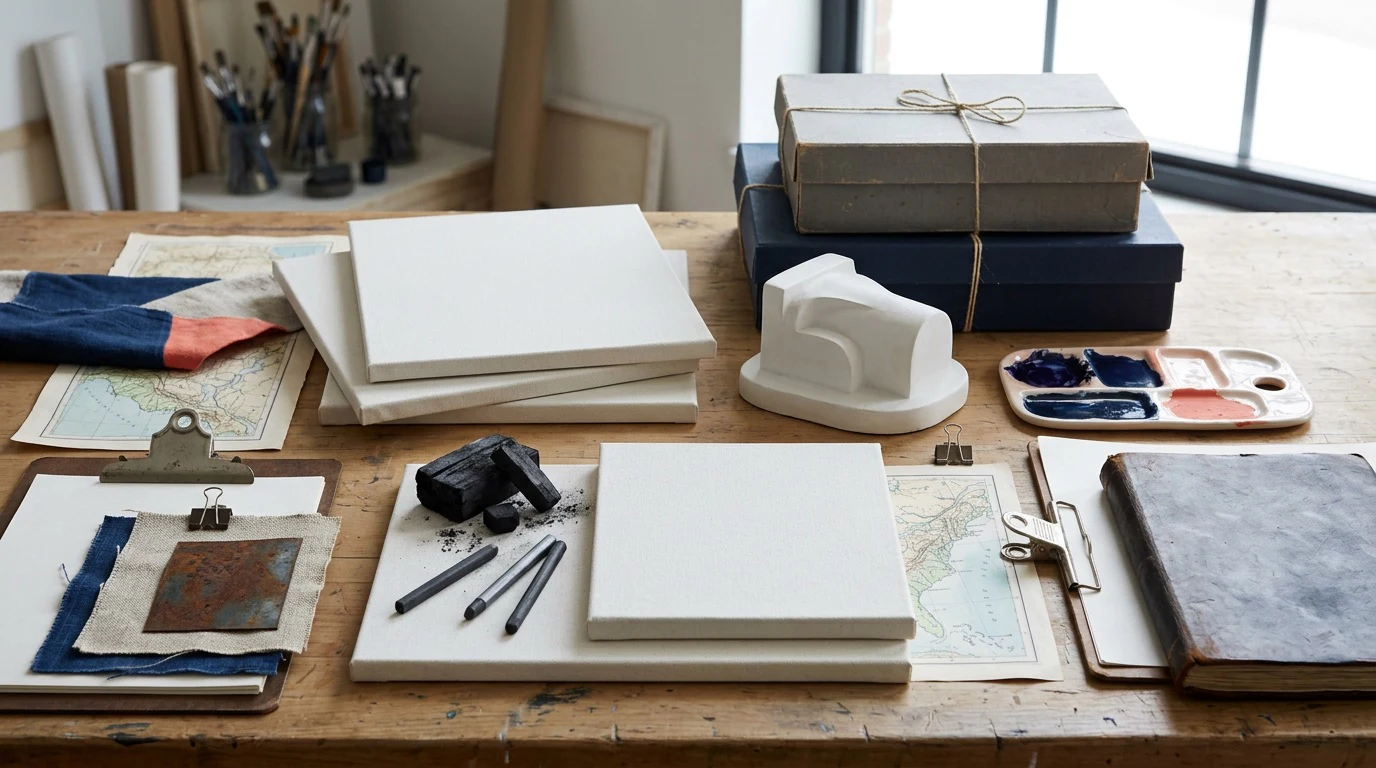
AP 2-D Art and Design is a portfolio assessment, not a written exam — there is no multiple-choice or free-response section and no test length. Instead you build and submit a portfolio in early May with two parts: a Sustained Investigation (a body of work showing inquiry and development, around 15 images) and Selected Works (about 5 works showing skill), focused on two-dimensional design — the elements and principles of design in a flat format. Trained readers score it from 1 to 5, and many colleges grant credit for a 3 or higher — confirm your target college's policy.
Two portfolio parts, one score
Unlike most AP courses, AP 2-D Art and Design has no sit-down exam. Your 1–5 comes from a portfolio you develop across the year — built around two-dimensional design — in two parts.
~15 images of inquiry & growth.
A connected body of work driven by your own question or idea. Readers look for genuine inquiry, experimentation, practice and revision over time — visual evidence that your work developed, plus brief written responses explaining what you investigated and how it evolved.
~5 works showing skill.
Your strongest individual pieces, chosen to show skillful, intentional use of two-dimensional design — point, line, shape, color, value, texture, space, and principles like balance, contrast, rhythm and unity. Each comes with short written information about materials, processes and ideas.
One 1–5 score.
Trained readers evaluate both parts against published rubrics and combine them into a single 1–5 — no written exam is averaged in. A 3 is "qualified"; a 4 or 5 is strong. Distributions are approximate and vary by year — confirm on College Board. Credit policies are set by each college; confirm yours.
Build the habit, not just the deadline.
A strong portfolio comes from steady making and documenting all year. Start free and use practice to sharpen the skills your best works depend on.
What AP 2-D Art and Design asks for
- Sustained Investigation — a body of work (~15 images) driven by inquiry
- Evidence of practice, experimentation and revision over time
- Written responses explaining your investigation and how it developed
- Selected Works — about 5 works that best show skill
- A clear focus on two-dimensional design: elements and principles in a flat format
How to build your portfolio
- Choose a real question or idea early and let it drive a series of works.
- Make work consistently — schedule studio time so the body of work grows steadily.
- Document process: photograph stages, experiments and revisions as you go.
- Use the elements and principles of design deliberately so your Selected Works read as intentional.
- Write clear, specific responses, and capture clean, well-lit images before the May deadline.
What makes the 2-D portfolio different
AP 2-D Art and Design is judged through a flat visual language. Strong work makes design decisions visible on the surface, not only in the idea behind the work.
| Area | What matters | Practice move |
|---|---|---|
| Sustained Investigation | A real visual question | Frame the investigation as a question you can test through shape, color, value, pattern, layout or image sequence. |
| Image set | Development over time | Photograph experiments, revisions and alternate compositions so the reader can see how the work changed. |
| Selected Works | Design control | Choose pieces where figure-ground, contrast, rhythm, hierarchy and edge control are intentional and easy to read. |
| Written evidence | Specific process language | Name the material choice, design problem and revision move instead of writing a broad theme statement. |
2-D portfolio checkpoints before you submit
A 2-D portfolio is reviewed through flat images, so the final check is about visual clarity on the page: crop, contrast, sequence and evidence of design thinking.
| Checkpoint | What to verify | Action |
|---|---|---|
| Thumbnail read | The idea survives at small size | Zoom out and ask whether the main shape, contrast and hierarchy still read before details disappear. |
| Surface quality | Color and value are clean | Check glare, uneven lighting, muddy value ranges and color shifts before uploading the image. |
| Sequence | The investigation has movement | Order the images so experiments, revisions and stronger solutions build a visible line of development. |
| Edges and space | The composition is deliberate | Review cropping, margins, negative space and figure-ground relationships in every selected image. |
| Selected Works | Skill is concentrated | Do not pick five pieces only because they look different; pick the five where design control is strongest. |
| Written response | Specific verbs beat themes | Use verbs such as cropped, layered, repeated, simplified, enlarged, masked, shifted or contrasted to describe actual choices. |
AP 2-D Art and Design questions
What's on the AP 2-D Art and Design assessment?
How is AP 2-D Art and Design scored?
What is a good AP 2-D Art and Design score?
How hard is AP 2-D Art and Design?
When is the AP 2-D Art and Design portfolio due?
Keep exploring AP.
One plan for your whole testing season.
PrepScore’s full practice covers the SAT, the ACT and select AP subjects — with an explanation on every question.