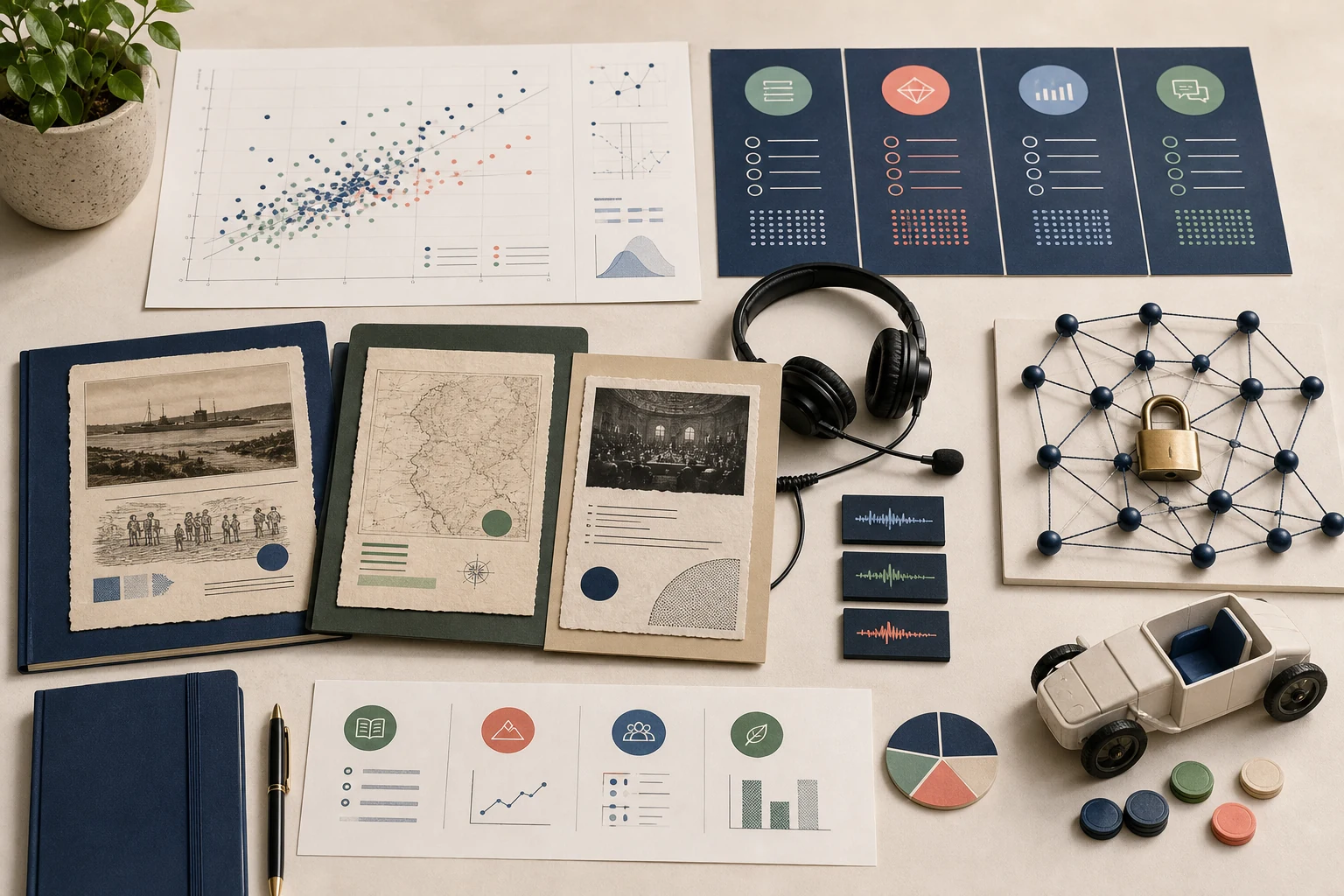
Student impactFive kinds of change require five different responses.
“The AP is changing” is too broad to be useful. Identify whether the change affects delivery, response mechanics, assessed content, task design or the existence of the course itself.
Delivery mode
A fully digital exam moves every scored response into Bluebook. A hybrid exam keeps part of the response on paper. Students should practice the exact mode because navigation, typing, recording and handwritten pacing create different risks.
Response equipment
World-language students will record speaking responses directly in Bluebook and need wired headsets with microphones. Music Theory also needs wired audio equipment, but its written free response stays on paper. Equipment checks belong in the study plan, not only the coordinator's checklist.
Question architecture
History keeps its content and rubrics while changing how SAQ sources and LEQ choice work. That means students should update task rehearsal without discarding the course notes, evidence banks and rubric language that remain valid.
Course framework
AP Statistics changes both the course organization and the exam blueprint. Old unit numbering, removed topics and six-FRQ mock tests can mislead students even when individual statistics explanations are still correct.
New course launch
AP Business with Personal Finance and AP Cybersecurity do not have a long archive of prior AP exams. Preparation must start from the published course and exam descriptions, the defined task types and classroom projects rather than reverse-engineering an old paper that does not exist.
Unchanged exams
If a subject is absent from the confirmed update list, continue with its current course and exam description. Do not import Statistics, language or history changes into Biology, Calculus or another unaffected AP simply because they share the same testing year.