
SAT flashcards that flip to a full explanation.
Not a word list. Each card is a prompt — a rule, a formula, a word in context — that flips to the reasoning behind it, and spaced repetition brings it back right before you'd forget it.
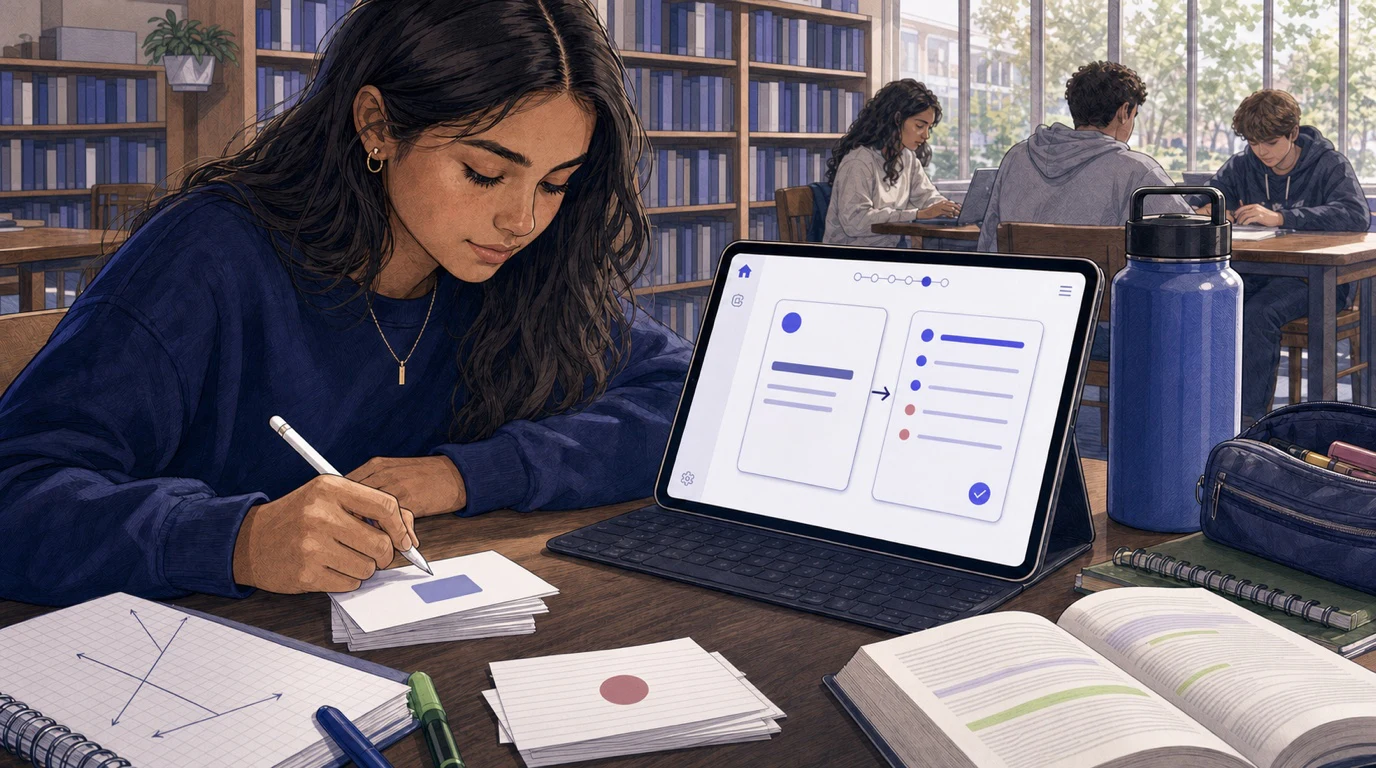
Some points are lost because the fact almost came back.
Flashcards aren't a replacement for practice — they're the memory layer that keeps small rules, formulas and words ready the moment a question needs them.
Grammar rules fade unless they're kept warm.
Comma vs semicolon, subject–verb agreement, modifiers — the Standard English Conventions rules become quick review cards instead of re-reading a grammar guide.
Math facts disappear unless they come back.
Slope, the quadratic, circle and triangle relationships, percent and probability — spaced review returns each one before memory fades, with the hard ones sooner.
Vocabulary in context needs nuance, not a list.
The SAT tests how a word behaves in a sentence. Cards put the word in context and contrast the near-meanings the test loves to bait you with.
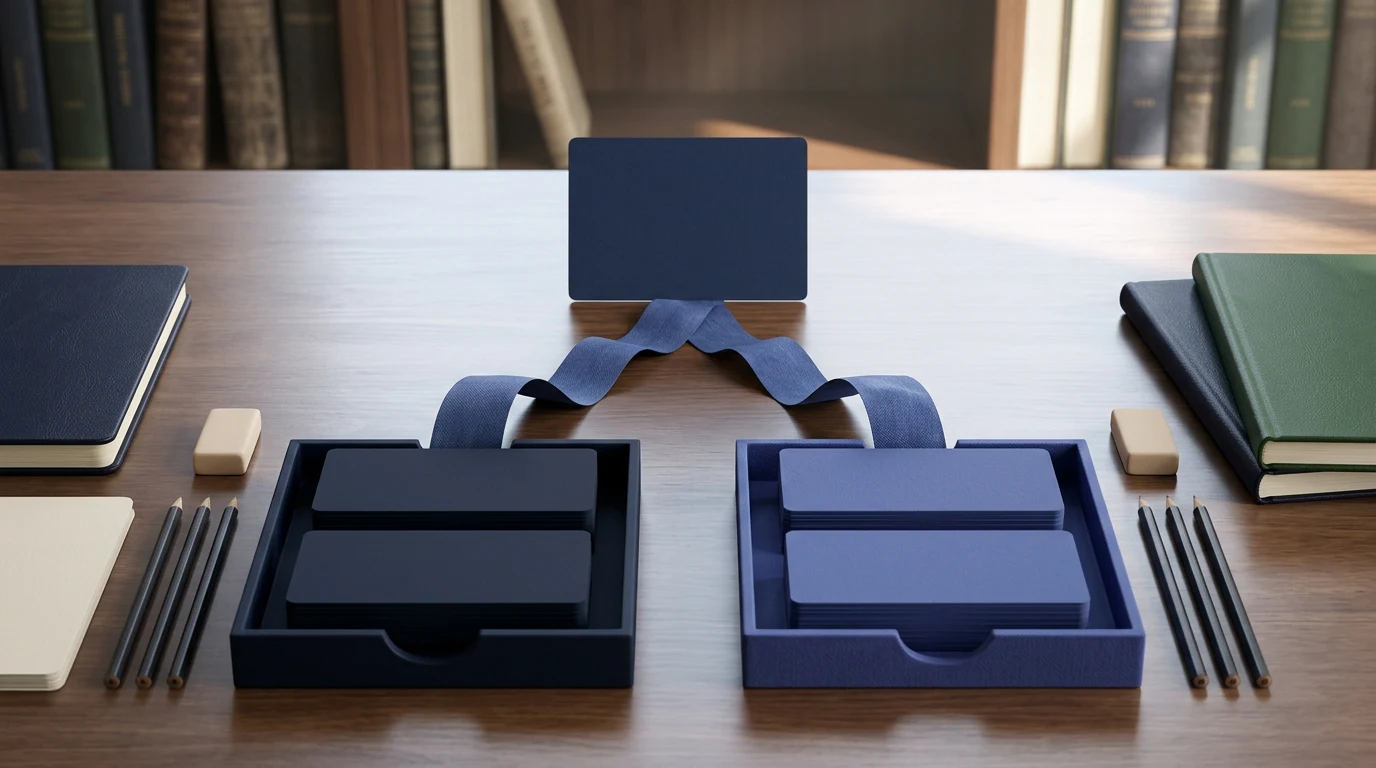
Eight decks, each trains a different exam skill.
Cards span both sections, sorted by the kind of thinking the SAT tests — not just "definitions." Each deck has its own cover and its own due queue.






Every card flips to the full reasoning — not just the answer.
The front is a short prompt you try to answer from memory. Flip it and the back doesn't just give the answer — it explains the whole card:
- The answer — and what your guess told you
- Core idea — the concept the card is really about
- Exam focus — exactly how the SAT tests it
- Memory hook — a sticky way to keep it
- Quick self-check — a recall prompt to prove it stuck
- Related skill — the domain it belongs to, to practice next

You rate each card. It schedules the next review.
A "Due today" count keeps every session small. After you flip, you rate how it felt — and the card comes back on the right day, with the hard ones returning sooner.
Overdue cards come back first, and the queue is reshuffled each session so you learn the fact, not the order.
Made to pair with practice
Flashcards are the memory layer, not the whole plan. When a practice or mock question exposes a fuzzy rule or formula, the matching deck keeps it warm until test day — memory plus application beats either one alone.
- Built from the same SAT content as your practice questions
- Cards surface on your dashboard as "due today"
- Covers both Reading & Writing and Math
Use it with
How SAT flashcards should be used
SAT flashcards work best when they support the digital SAT domains: Reading and Writing rules, vocabulary in context, Math formulas and recurring reasoning traps.
| Area | What matters | Practice move |
|---|---|---|
| Reading and Writing | Rule recall | Use cards for punctuation, transitions, subject-verb agreement, modifiers and rhetorical purpose. |
| Vocabulary | Context over definition | Review near-meaning contrasts so a word works inside a sentence, not only on a memorized list. |
| Math | Fast formula access | Keep slope, quadratics, exponents, circles, triangles and percent relationships ready for timed work. |
| Practice pairing | Apply after recall | After a deck session, do a short question set in the matching domain to prove the card transfers. |
SAT flashcard questions
What makes PrepScore's SAT flashcards different?
How does the spaced repetition work?
What do SAT flashcards cover?
Should I only use flashcards for the SAT?
Keep every rule, formula and word warm until test day.
Start free, then let the decks bring back what you're about to forget.