
Sit a full-length, adaptive SAT mock — and see where the test takes you.
The complete digital-SAT shape: two Reading & Writing modules, a break, then two Math modules, with each section's second module getting harder or easier based on your first. You finish with a practice score, a domain breakdown, and the one thing almost no tool shows — which Module 2 you reached.

A practice set tells you a topic. A full mock tells you test day.
Pace, stamina, the section switch, the adaptive jump to a harder or easier Module 2 — none of it shows up in 10-question drills. A full-length sitting is the only honest rehearsal.
Two-plus hours is its own skill.
Running out of time, fading in the second Math module, rushing the last passage — those only surface under the real clock, across the whole test, not in a short set.
See which Module 2 you reached.
Each section routes you into a harder or easier second module — the adaptive signal that sets your score ceiling. Almost no other tool surfaces it; we show it for both sections.
The trend is the truth, not one sitting.
Any single mock can be a good or bad day. We chart your mocks over time, because the line — not a lucky number — is the read on where you'll land.
The complete digital-SAT shape, end to end.
Reading & Writing first, then Math — two modules each, a real 10-minute break between sections, and the same question counts and timing as the official test.
Reading & Writing, a break, then Math.
You move through it exactly as you would on test day: you can move back and forth within a module, but once a module ends it's locked — and your performance there decides whether the next module is the harder or easier set. The clock and the section switch are part of what you're rehearsing.
- Two Reading & Writing modules, then two Math modules
- A single 10-minute break between the two sections
- The built-in graphing calculator is available across all of Math
- 98 questions in about 2 hours 14 minutes
Module 1 decides whether Module 2 gets harder or easier.
This is the heart of the digital SAT — and the part most prep ignores. Do well on the first module and the test routes you into the harder second module, which is what unlocks the top of the score range. Reach only the easier module and your ceiling is capped, no matter how many you then get right. After every mock, PrepScore tells you exactly which Module 2 you reached in each section, so you know whether your ceiling — or your accuracy — is the thing to work on.
- Shown for both Reading & Writing and Math
- Tells you whether to chase the harder module or clean up errors
- A clear, student-friendly read on the test's hidden mechanic
A score is the start. Then the mock explains it.
Every full mock returns a practice score and then takes it apart — by section, by domain, by route and by pace — so the number turns into a plan.
Then walk back through every question.
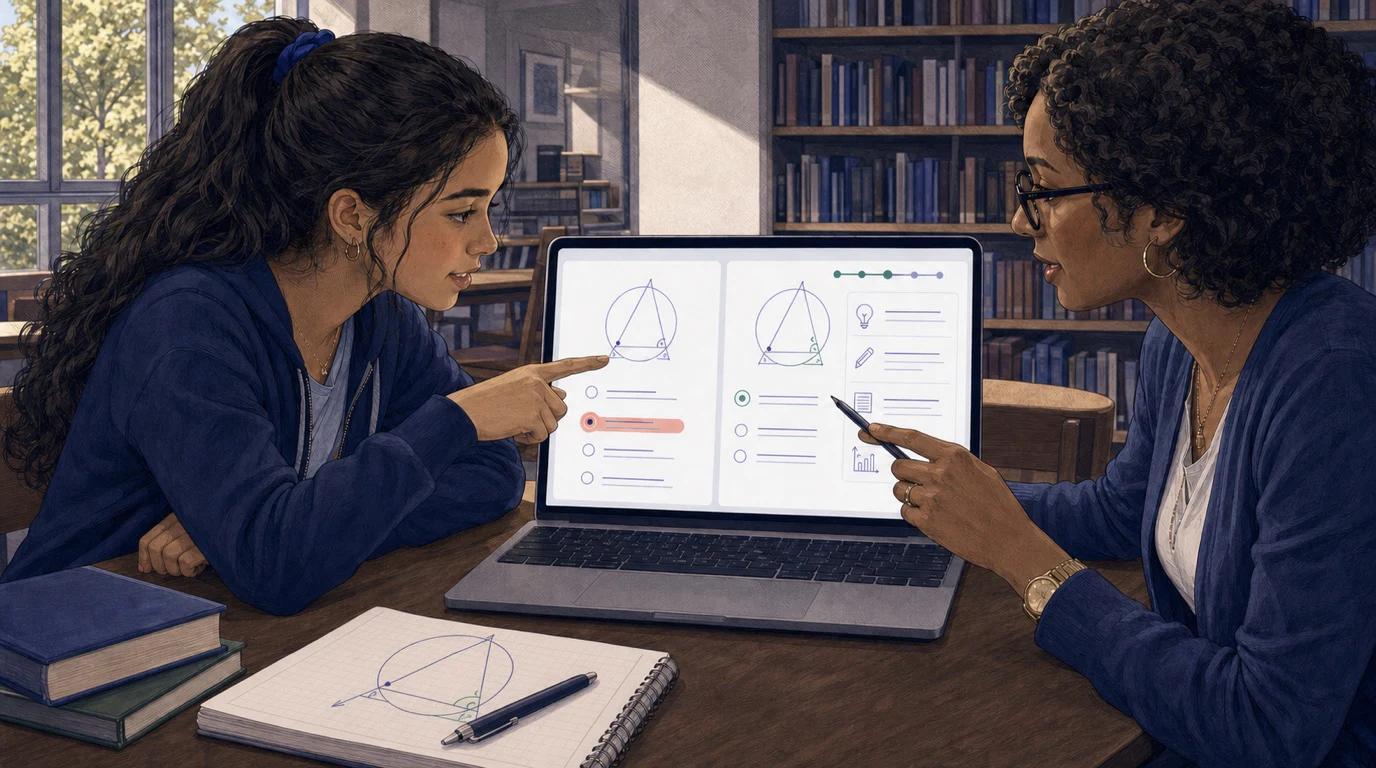
Open any item in a split view — your answer beside the same four-part explanation your practice uses: why the right answer is right, why each distractor fails, what it tested and the trap to avoid. The mock doesn't just score you; it teaches the misses.
An honest word on the score — and the screen.
A mock score here is a SAT-style practice score, not an official SAT result: College Board computes the real score with an adaptive model we don't reproduce, so treat yours as a calibrated estimate of where you're trending. And because the real SAT is taken on a computer, full mocks are best sat on one too — give yourself the uninterrupted 2 h 14 m. The shorter timed module (about 32–35 minutes) is the unit that fits a phone or a lunch break.
Use it with
Useful for searches like
- Full-length digital SAT practice test
- Adaptive SAT mock exam
- SAT practice test scored out of 1600
- Timed SAT module practice
SAT mock exam questions
Are these real SAT questions?
Is the mock adaptive like the real test?
Is the score an official SAT score?
How long is a full mock?
Do mock mistakes go anywhere?
Find out where your SAT score really stands.
Start free, then sit a full-length adaptive mock and see your score, your route and your trend.